
How it Works
01
Organic Phase
Sludge and digestate enter the HTC plant directly, without the need for preliminary drying.

02
Hydrothermal Conversion
The pressurized thermal process (approx. 190°C, 14 bar) lasts about 60 minutes.

03
Liquid/Solid Separation
The conversion yields a liquid for biogas production and a highly dewatered, sterilized solid (hydrochar)

04
Final Valorisation
The hydrochar can be used as a soil conditioner, fuel, or packaging material, closing the loop according to circular economy principles.

Why choose a CarboREM HTC plant

Reduction of Disposal Costs
The sludge exiting the filter press is hydrophobic and allows for high dry matter levels (>50%), with clear advantages in final disposal costs.

Dry Matter Reduction Directly in the Process
The HTC process converts part of the solid content in the starting sludge into liquid with high COD, thus reducing the final volumes exiting the solid/liquid separation.

Increase in Biogas Production
From 30% to over 50% more biogas production depending on the matrix and the type of anaerobic digestion.

Nutrient Recovery
Thanks to the patented technology, over 1/3 of the ammoniacal nitrogen contained in the sludge can be transformed into ammonium sulfate, resulting in an HTC liquid more compatible with biogas production.

Hydrochar Valorisation
The process concentrates phosphorus in the hydrochar, allowing for easy recovery from the ashes (SSA) after combustion. Other direct applications are currently being developed, such as co-composting (ACF), filler for building products, replacement for anthracite in metallurgical processes, and filler for the production of packaging cardboard.

Health and Environmental Safety
High temperatures allow for the total reduction of bacteria like E. Coli and Salmonella, sterilizing the sludge. Furthermore, ongoing studies show a reduction of over 90% of the main PFAS families.
Total
integration
HTC technology also allows for cost reduction in subsequent processes. Dryers, incineration, or solar greenhouses can be easily integrated downstream of the process.
Maximum
efficiency
The hydrothermal process allows for a reduction of thermal consumption compared to classic drying systems, this allows for significant energy savings.
Applications of Hydrochar
Hydrochar, the high-value solid derived from the HTC treatment of sludge and organic waste, has multiple uses thanks to its unique characteristics:

Fertilizer
Stable and rich in nutrients such as phosphorus and nitrogen, hydrochar can be used as an organic soil conditioner to improve soil quality and promote crop growth.
Sound Absorber
The physical properties of the material make it suitable for use in construction as a natural acoustic insulator.
Solid Fuel
Thanks to its high calorific value, hydrochar can be used as fuel for combustion or gasification plants, ensuring sustainable energy recovery.
Phosphorus Recovery
Hydrochar allows phosphorus to be concentrated and, combined with combustion, is easily recovered from the ashes through acid extraction (H-SSA).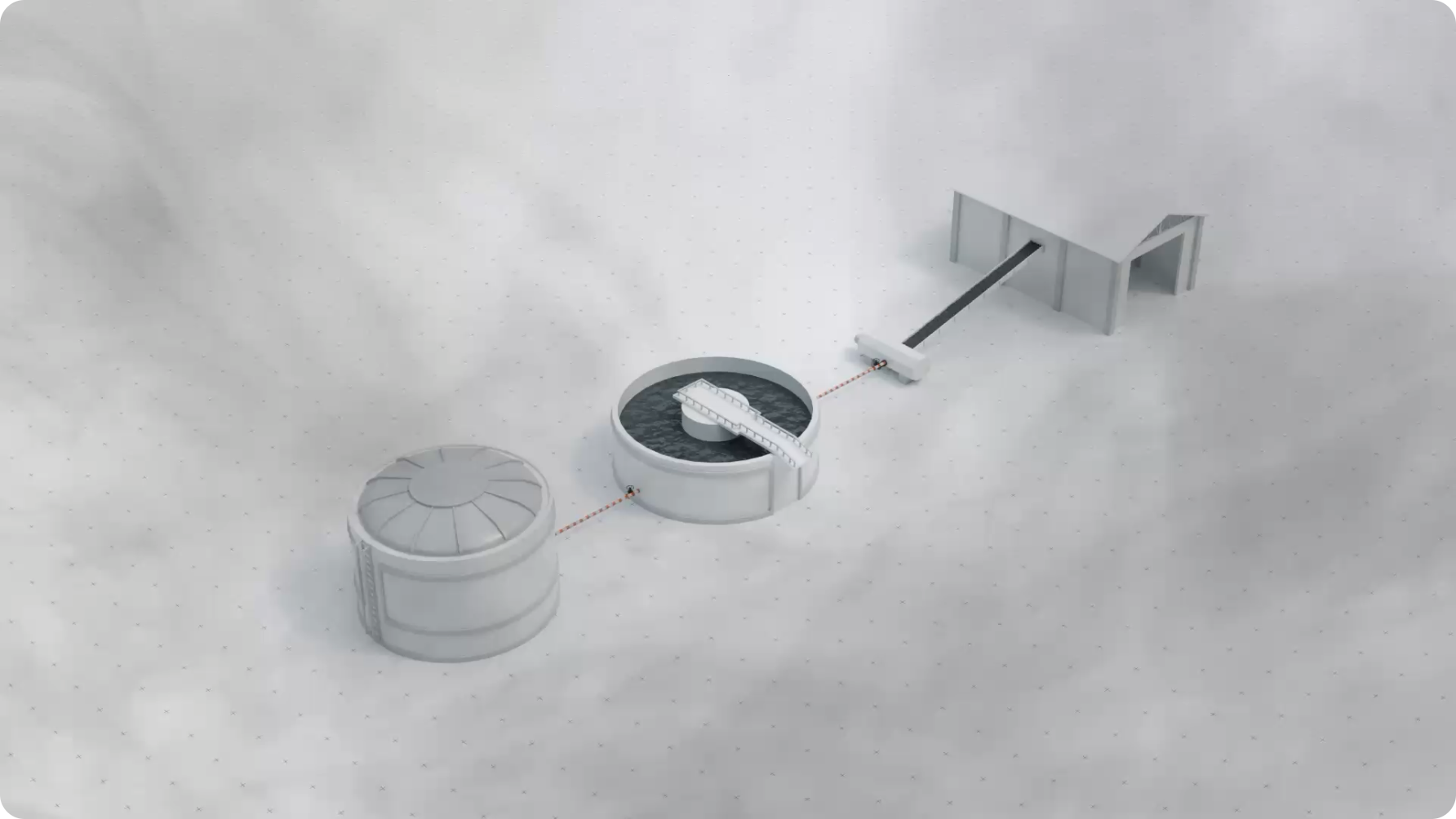
Our Products
0
Conversion of solid into liquid HTC during the process
0
Hydrochar dry solid content
0